Food delivery app development cost runs $8,000 to $150,000+ depending on which of three paths you take. A branded readymade script you rebrand and launch: $1,500–$5,000. A clone of an existing model (Zomato, Uber Eats) with your own twist: $18,000–$40,000. A full custom multi-vendor aggregator built from a blank repo: $45,000–$150,000+. The gap between those numbers isn’t quality — it’s how much you rebuild that already exists.
We’ve shipped food and restaurant apps since 2010, and the budget surprises almost always trace to the same mistake: paying custom-build prices for features that ship in a $5,000 source-code base. This guide breaks down what you’re actually buying, what drives food delivery app development cost, and how to pick the path that fits — without overpaying a food delivery app development company for plumbing you could license.
What food delivery app development actually includes
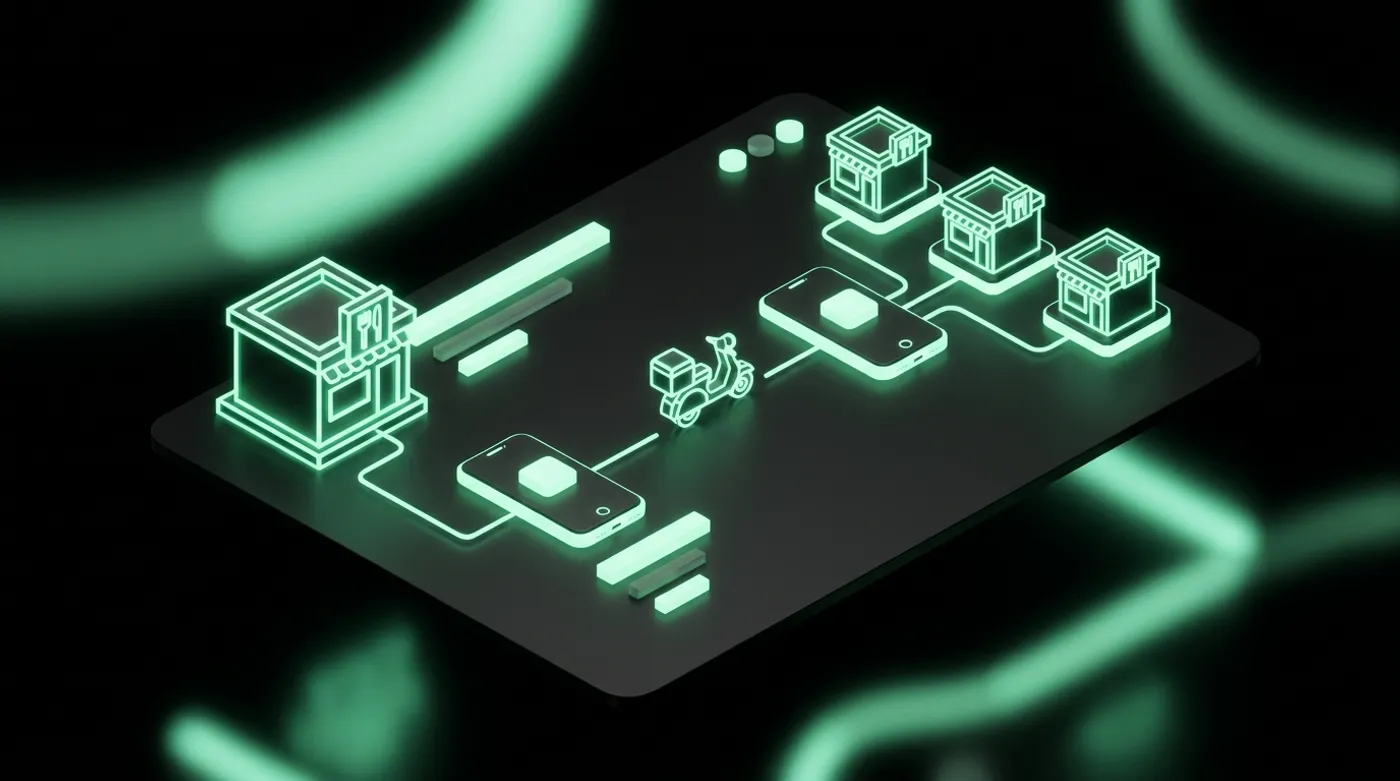
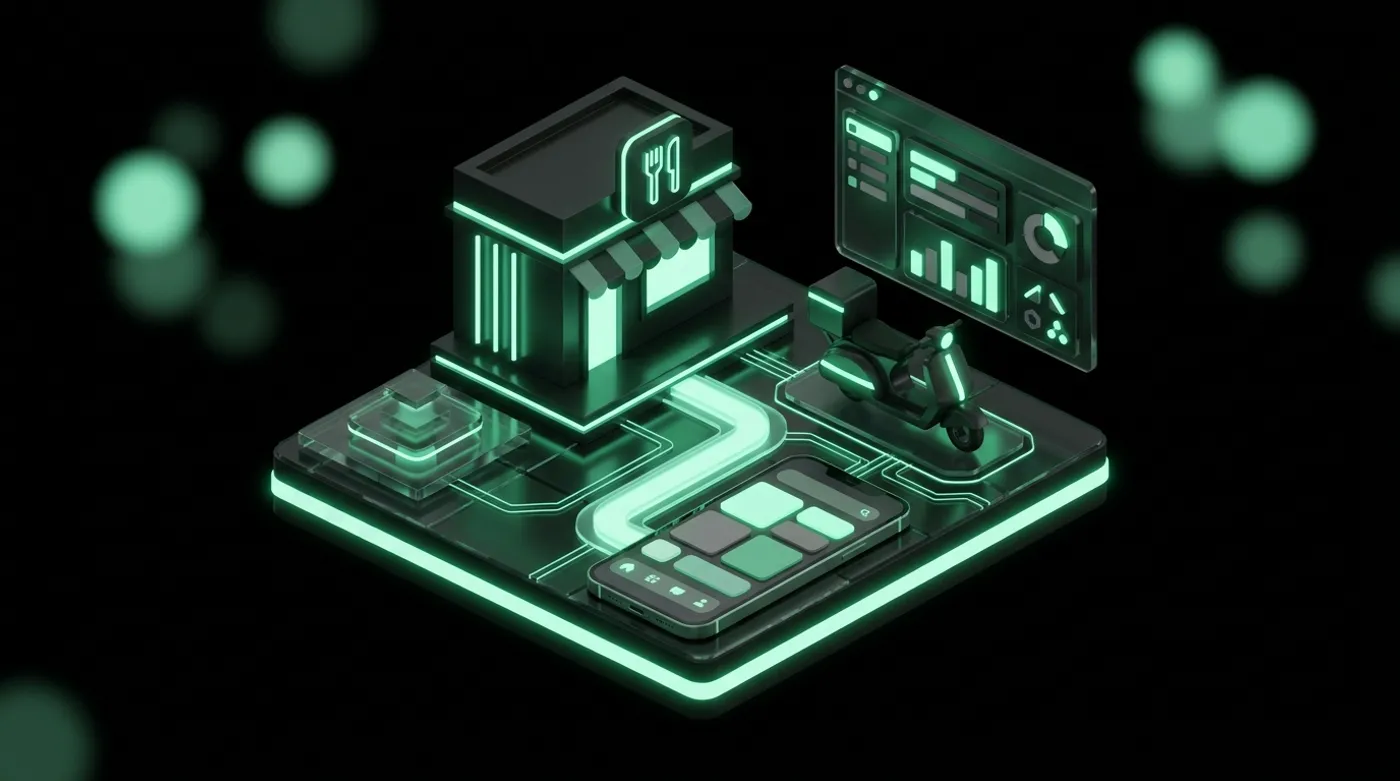
A working food delivery platform isn’t one app. It’s four connected surfaces sharing one backend, and the cost is mostly in the seams between them:
- Customer app — discovery, cart, checkout, live order tracking. The only surface you spend marketing money on, so it carries the design budget.
- Restaurant app — a tablet at the counter: accept/reject orders, edit the menu, 86 an item in two taps, see payouts.
- Delivery rider app — battery-sensitive, GPS-heavy. Riders run it 10 hours a day on cheap Android phones, so polling frequency and screen-on time get tuned down hard.
- Admin dashboard — the operator’s cockpit: commission rules per restaurant, live ops map, dispute and refund handling, onboarding.
When someone quotes “a food delivery app” at $12,000, ask which of these four they’re counting. Usually it’s one and a half. The real number for all four, built well, starts much higher — which is exactly why the readymade and clone paths exist.
The MVP feature set — what ships first, what waits
The fastest way to blow a launch budget is treating version one like version three. Here’s the line we draw with operators on day one.
Ships in the MVP, non-negotiable: phone-OTP or social login, restaurant discovery with cuisine and price filters, a working cart and checkout, one payment gateway live, order status with live rider tracking, and a restaurant tablet that can accept and reject orders. That’s the loop. Without all six, you don’t have a food delivery app — you have a menu viewer.
Waits for version two, no matter how badly someone wants it: loyalty wallets, subscription tiers (the Zomato Gold / Eats Pass model), in-app chat, scheduled orders, and multi-language. Every one of these is real revenue eventually, and every one is a tar pit if you build it before you have orders flowing. We’ve watched two launches slip a full quarter because loyalty points got scoped into the MVP. Ship the loop, get real orders, then add the retention layer once you know which retention lever your market actually pulls.
The rider app hides the cost most first-time operators miss. It runs for 10-hour shifts on $80 Android phones, so background location, battery drain, and offline-tolerance aren’t polish — they’re whether the app survives a real shift. Budget real engineering time there even in an MVP.
What drives food delivery app development cost
Three levers explain nearly every quote. Feature scope is the big one; the other two just multiply it.
Feature scope. Each user role adds auth logic, conditional navigation, and a separate QA path. Real-time features — live rider tracking, presence, surge — need WebSocket or Firebase connections that push complexity up fast and add ongoing infra cost. Surge pricing and batch-order routing are the two line items we see underestimated most.
Team region. A vetted India team runs $18–$55/hr; Eastern Europe $50–$90; a US/EU agency $100–$180. The same multi-vendor build is 3–4× more in San Francisco than Bengaluru for output that ships to the same App Store.
Build path. This is the lever most buyers don’t know they have. You don’t have to start from zero. A food delivery script gives you all four apps plus the backend as source code you own — so your spend goes into branding, your payment accounts, and the 2–3 features that actually differentiate you, not into rebuilding a cart.
Readymade vs clone vs custom — which path fits
There’s no universally right answer; there’s a right answer for your stage and budget. Here’s how we route operators on a discovery call:
The middle path is the one most operators actually want and rarely get pitched: buy the source for $5,000, ship branded in 4–6 weeks, learn what your market rewards in the first 90 days, then engage us for a focused customisation sprint. Roughly 40% of our readymade buyers come back for paid custom work in year one — and they spend it on the right things because the data told them what to build.
How to build a food delivery app: the architecture that holds up
If you’re mapping out how to build a food delivery app from scratch, the architecture decisions you make in week one decide your year-two infra bill. The pattern we ship and have rebuilt enough times to trust:
- One Flutter codebase compiling to iOS and Android for each role app. One team, one bug list, one release cycle — about 60% the engineering cost of a React Native split or two native codebases once you count platform-specific work.
- NestJS backend on Node, deployed to AWS or DigitalOcean, with MongoDB for the order and catalog data and Redis for live-tracking and session state.
- Mapbox for routing by default (cheaper at scale than Google Maps unless you need Places autocomplete), with a provider-interface so you can swap.
- Stripe for international payments, Razorpay for India, behind one checkout abstraction so adding a third gateway later isn’t a rewrite.
What 6–10 weeks actually looks like
A readymade-with-branding build isn’t a black box you check on at the end. We work in two-week sprints with a demo every Friday and a staging build from sprint one:
- Weeks 1–2 — discovery + branding swap: logos, colors, payment keys, push certificates, zone config. You review on staging.
- Weeks 3–6 — your differentiators: the 2–3 features the readymade doesn’t ship, wired into the existing four-app structure.
- Weeks 7–10 — TestFlight + Play internal track → public release, plus 60 days of crash triage.
Custom builds run 12–20 weeks for the same shape because weeks 1–6 are spent rebuilding what the script already had. That’s the whole pitch for starting from source.
How the app makes the build cost back
Development cost is a one-time number; the model underneath it is what decides whether the app pays for itself. A food delivery platform monetises a single order up to four ways, and single-revenue platforms struggle to cover rider economics — the line item that quietly kills most margins.
- Commission per order, 15–30% from the restaurant. The core lever, set per-restaurant in the admin (premium venues pay less, new ones pay more during a 90-day promo).
- Delivery fee from the customer, distance-based and surge-aware. $0.40–$0.80/km in India, $2–$5 flat in US markets. Keep surge transparent — opaque surge is the number-one complaint on every delivery app.
- Promoted listings — restaurants pay for top-of-search placement. On the big platforms this grew to roughly 18% of revenue, so it’s not a rounding error.
- Subscription — a monthly free-delivery tier that lifts order frequency among the 6–9% of users who take it.
The admin we ship configures all four; you switch them on as you scale. Most operators start with commission plus delivery fee, add promoted listings past ~200 restaurants, and layer subscription past ~10,000 monthly actives. A $5,000 source-code base that captures a 20% commission pays for itself inside the first few hundred orders — which reframes the whole build-cost question from expense to payback period.
Single-vendor or multi-vendor — pick before you scope
A single-restaurant ordering app and a multi-restaurant aggregator look similar in a mockup and diverge hard in the backend: commission engines, vendor payouts, and per-store onboarding only exist in the multi-vendor case. Don’t pay aggregator prices for a single-venue app, and don’t try to retrofit multi-vendor onto a single-vendor base later. We break down where each one wins in our single vs multi-vendor food delivery guide. If you already know you want the aggregator model, the Zomato clone and Uber Eats clone pages show what that ships as.
Choosing a development partner without getting burned
The food delivery app development company you hire matters less than the questions you make them answer. Ask for the source-code handover terms in writing — you should own everything, no per-seat or per-order license. Ask which of the four apps a quote covers. Ask to see a staging build before the second invoice. And if a vendor can’t tell you their Mapbox-vs-Google routing cost at 10,000 orders/month, they haven’t run one at scale.
We build on Flutter because the same bench that ships your delivery apps also maintains getwidget.dev, our open-source Flutter UI kit with 4M+ downloads — so staffing is never the bottleneck. If you want the full service overview rather than the cost breakdown, our food delivery app development page covers the engagement, and the engineering practice sits under Flutter development services.
Found this useful?
We build the apps described in this guide. Readymade or custom — ship in weeks.
Browse food delivery platform →